Unlock Your Strength: The Ultimate Guide to Leg Day Workouts

Leg day is often seen as the toughest part of a workout routine, but it’s also one of the most important. Building strong legs not only improves your overall strength but also enhances your athletic performance and stability. Whether you’re a beginner or looking to level up your routine, this guide will help you understand why leg day matters, the benefits it brings, and how to craft the perfect workout for your needs.
Key Takeaways
- Leg day workouts are crucial for building strength and endurance in your lower body.
- Incorporating a mix of compound and isolation exercises can maximize your results.
- Proper nutrition before and after workouts is essential for recovery and performance.
- Mental strategies like setting goals and finding motivation can help you tackle leg day with confidence.
- Tracking your progress over time keeps you motivated and focused on your fitness journey.
Why Leg Day Workout Is Essential
Building Overall Strength
It's easy to think of leg day as just being about your legs, but it's so much more than that. Leg workouts are actually a cornerstone for building overall strength. Think about it: your legs are your foundation. A strong foundation supports everything else. When you work your legs, you're not just building bigger quads or hamstrings; you're improving your ability to lift heavier in other exercises, too. It's all connected. Neglecting leg day is like building a house on a weak foundation – eventually, things will start to crumble.
Targeting Major Muscle Groups
Leg day is where you hit some of the biggest muscles in your body. We're talking quads, hamstrings, glutes, and calves. These aren't just for show; they're powerhouses that drive movement and support your entire body. Working these major muscle groups not only builds strength but also contributes to better balance, stability, and overall athletic performance. Plus, bigger muscles mean a higher metabolism, which can help with weight management. It's a win-win.
Enhancing Stability and Endurance
Beyond just strength, leg day is crucial for improving stability and endurance. Think about all the activities you do every day that rely on your legs: walking, running, climbing stairs, even just standing. Strong legs provide the stability you need to move confidently and efficiently. And the more you work them, the more endurance you'll build, allowing you to stay active for longer without getting tired. It's about building a body that can handle whatever life throws at it.
Skipping leg day is like only doing half the job. You might look good from the waist up, but you're missing out on a huge opportunity to build a stronger, more balanced, and more capable body. Don't underestimate the power of a well-planned leg workout.
Benefits of Leg Workouts
Leg day. Some people love it, some people dread it. But no matter how you feel about it, there's no denying the awesome benefits that come from consistently working those legs. It's not just about having nice-looking legs; it's about overall strength, athletic ability, and even your metabolism. Let's get into why you should never skip leg day.
Improved Lower Body Strength
Leg workouts are a powerhouse for building overall strength. Think about it: squats, lunges, deadlifts – these exercises hit multiple muscle groups at once. You're not just working your quads and hamstrings; you're also engaging your glutes, calves, and even your core. This leads to a stronger foundation for pretty much everything you do, from walking up stairs to lifting heavy objects. Plus, stronger legs can help prevent injuries. It's a win-win.
Increased Athletic Performance
Strong legs are the secret weapon for athletes. Whether you're a runner, a basketball player, or just enjoy weekend hikes, powerful legs will improve your performance. Leg exercises like squats and deadlifts improve explosive power for sprinting and jumping. They also build endurance for long-distance activities. And don't forget about stability and balance, which are key for agility-based sports. Basically, if you want to up your game, you need to train the legs.
Boosting Metabolism
Want to torch calories and rev up your metabolism? Leg workouts are the way to go. Your leg muscles are the biggest in your body, so working them requires a ton of energy. This means you'll burn more calories during your workout and even after you're done. Plus, building muscle increases your basal metabolic rate, which helps you burn more calories even when you're resting. It's like getting paid to sit on the couch!
I used to skip leg day all the time, thinking it wasn't as important as upper body. But once I started incorporating regular leg workouts, I noticed a huge difference in my overall strength and energy levels. Plus, my jeans fit better, which is always a bonus.
Leg Day Techniques for Beginners
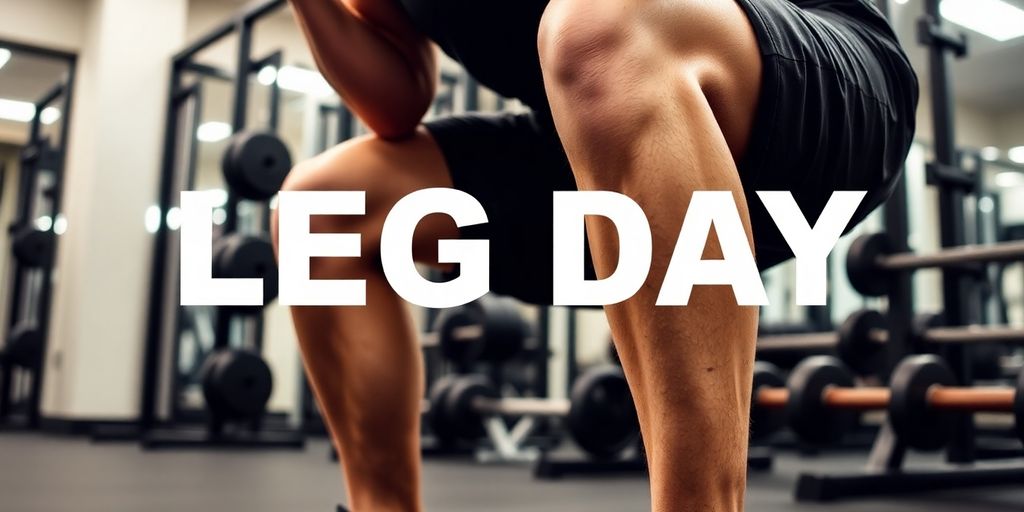
Starting leg day can feel like climbing a mountain, but it doesn't have to be intimidating. The key is to start slow, focus on form, and gradually increase the intensity. Let's break down some beginner-friendly techniques to get you started on the right foot.
Mastering Bodyweight Exercises
Before you even think about picking up a weight, get comfortable with bodyweight exercises. These are the building blocks of any good leg workout. They help you develop balance, coordination, and a feel for the movements. Plus, they're a great way to build a base level of strength. Here are a few to focus on:
- Squats: The king of all leg exercises. Focus on keeping your back straight and your core engaged.
- Lunges: Forward, reverse, and lateral lunges all target different parts of your legs and glutes. Make sure your knee doesn't go past your toes.
- Glute Bridges: A great way to activate your glutes and hamstrings. Squeeze your glutes at the top of the movement.
- Calf Raises: Simple but effective for building calf strength. You can do these anywhere!
Understanding Proper Form
Form is everything. Seriously. Bad form can lead to injuries that will set you back weeks, or even months. It's better to lift lighter with good form than to try and lift heavy with bad form. Consider recording yourself to check your form, or even better, ask a trainer or experienced lifter to give you feedback. Here are a few things to keep in mind:
- Keep your back straight: Avoid rounding your back, especially during squats and deadlifts.
- Engage your core: This will help stabilize your spine and prevent injury.
- Control the movement: Don't just drop the weight. Lower it slowly and deliberately.
- Listen to your body: If you feel pain, stop! It's better to err on the side of caution.
Creating a Balanced Routine
A balanced routine is key to developing well-rounded leg strength. Don't just focus on one muscle group. Make sure you're hitting your quads, hamstrings, glutes, and calves. A good starting point might look something like this:
- Squats: 3 sets of 8-12 reps
- Lunges: 3 sets of 10-12 reps per leg
- Glute Bridges: 3 sets of 15-20 reps
- Calf Raises: 3 sets of 15-20 reps
Remember to warm up before each workout with some light cardio and dynamic stretching. Cool down afterwards with static stretches, holding each stretch for 30 seconds. This will help improve flexibility and reduce muscle soreness. Don't forget to track your leg workout progress over time to see how far you've come!
Leg day doesn't have to be a dreaded chore. With the right approach, it can be a challenging and rewarding part of your fitness journey. Start slow, focus on form, and gradually increase the intensity. Before you know it, you'll be crushing your leg workouts and seeing real results.
Advanced Leg Day Techniques
Ready to kick your leg workouts up a notch? Once you've got the basics down, these advanced techniques can help you push past plateaus and spark new muscle growth. It's all about intensity and smart training.
Incorporating Drop Sets
Drop sets are a fantastic way to maximize muscle fatigue. The idea is simple: you perform an exercise to near failure, then immediately reduce the weight and continue repping until you reach failure again. This forces your muscles to work beyond their normal limits, leading to greater gains. For example, if you're doing squats with 225 lbs and can only manage 8 reps, immediately drop the weight to 185 lbs and do as many more as you can. You can even do multiple drops in a single set. Just be careful not to overdo it, as drop sets can be very taxing on your body. Make sure you have a spotter if you're using heavy weights.
Utilizing Supersets
Supersets involve performing two exercises back-to-back with minimal rest in between. This is a great way to increase the intensity of your workout and save time. For leg day, you could pair a compound exercise like squats with an isolation exercise like leg extensions. Or, you could pair two opposing muscle groups, like quads and hamstrings. Here's an example:
- Barbell Squats: 3 sets of 8-12 reps
- Immediately followed by: Lying Hamstring Curls: 3 sets of 12-15 reps
- Rest for 60-90 seconds, then repeat.
Supersets not only challenge your muscles but also give your cardiovascular system a workout. Remember to choose exercises that complement each other and don't compromise your form.
Exploring Plyometric Exercises
Plyometrics are exercises that involve explosive movements, like jumping and hopping. They're great for developing power and explosiveness in your legs. Some popular plyometric exercises for legs include jump squats, box jumps, and lunge jumps. These exercises can really help improve your athletic performance. Here's a simple plyometric routine you can try:
- Jump Squats: 3 sets of 10-15 reps
- Box Jumps: 3 sets of 8-12 reps
- Lunge Jumps: 3 sets of 10-15 reps per leg
Plyometrics are high-impact, so it's important to have a solid foundation of strength before incorporating them into your routine. Start with low-intensity exercises and gradually increase the intensity as you get stronger. Always focus on proper form to avoid injury.
Remember, these advanced techniques are tools to help you progress. Don't feel like you need to use them all the time. Listen to your body, prioritize proper form, and gradually increase the intensity of your workouts over time. And don't forget to warm up properly before each workout and cool down afterward.
Nutrition for Optimal Leg Day Performance
Okay, so you're hitting legs hard. That's awesome! But are you fueling your body right? It's not just about the workout itself; what you eat before, during, and after makes a huge difference. Let's break down how to eat for maximum leg day gains.
Pre-Workout Fueling
Think of your pre-workout meal as the gasoline for your engine. You wouldn't try to drive across the country on an empty tank, right? Same goes for your legs. You need sustained energy, not a sugar crash. I usually go for something that combines complex carbs and a bit of protein about 1-2 hours before I start.
- Oatmeal with berries and a scoop of protein powder is a solid choice.
- A sweet potato with a little bit of chicken or turkey.
- Whole-wheat toast with avocado and an egg.
Don't overeat! You want to feel energized, not sluggish. Experiment to see what works best for you. Some people can handle a bigger meal closer to their workout, while others need something lighter and earlier.
Hydration Strategies
Dehydration is your enemy. It can lead to fatigue, muscle cramps, and a drop in performance. I always keep a water bottle with me throughout the day, not just during my workout. Before you even start your leg exercises, make sure you're well-hydrated. During your workout, sip water regularly. If it's a really intense session, consider an electrolyte drink to replace lost minerals. You can even try a caffeine kick before your workout.
Post-Workout Recovery
This is where the magic happens. Your muscles are broken down and ready to rebuild, so you need to give them the right building blocks. Protein is key, of course, but don't forget about carbs to replenish your glycogen stores. I usually aim for a protein shake with some fruit within 30-60 minutes after my workout.
- Whey protein is a popular choice because it's quickly absorbed.
- Casein protein is good before bed because it digests slowly.
- Don't forget about whole foods! A chicken breast with brown rice or a salmon fillet with quinoa are great options too.
Here's a simple table to give you an idea of what to aim for:
| Nutrient | Amount (per kg of body weight) | Timing | Example Foods |
|---|---|---|---|
| Protein | 0.3 - 0.4g | Within 1 hour post-workout | Whey protein shake, chicken breast, Greek yogurt |
| Carbs | 0.5 - 0.7g | Within 1 hour post-workout | Fruit, brown rice, sweet potato |
| Hydration | As needed | Before, during, and after workout | Water, electrolyte drinks |
Mental Strategies for Leg Day Success
Okay, let's be real. Leg day can be a mental battle as much as a physical one. It's easy to dread it, to want to skip it, or to half-ass it when you're actually there. But building strong legs isn't just about the squats and lunges; it's about your mindset too. Here's how to get your head in the game.
Setting Realistic Goals
Don't try to become a powerlifter overnight. Start small, and gradually increase the weight or reps. If you're new to this, maybe aim to just complete the workout without skipping any exercises. The key is to set goals that are challenging but achievable. This helps you stay motivated and prevents discouragement. For example, instead of aiming for a 200lb squat right away, focus on perfecting your form with a lighter weight and gradually increasing it by 5-10 pounds each week. This approach will not only help you build strength safely but also boost your confidence as you see progress.
Finding Motivation
Motivation can be tricky. Some days you're pumped, other days you'd rather binge-watch Netflix. Here are a few things that help me:
- Workout Buddy: Having someone to suffer with makes it way more bearable. Plus, you can push each other. A workout buddy can make all the difference.
- Pump-Up Playlist: Music is a game-changer. Create a playlist of songs that get you fired up. Think heavy beats and empowering lyrics.
- Visual Reminders: Post pictures of your fitness goals somewhere you'll see them every day. It could be a photo of an athlete you admire or even just a quote that inspires you.
I find that reminding myself why I'm doing this helps a lot. Is it to feel stronger? To improve my athletic performance? To fit into those jeans? Whatever it is, keep that reason in mind when you're struggling.
Visualizing Success
This might sound a little woo-woo, but it works. Before you start your workout, take a few minutes to visualize yourself crushing it. Imagine yourself lifting the weight, feeling strong, and completing each rep with perfect form. See yourself succeeding. This can help boost your confidence and reduce anxiety. Think of it as a mental warm-up. It's like practicing the routine in your head before you even touch the weights. This technique can be especially helpful when you're attempting a new personal best or tackling a particularly challenging exercise. Visualizing success can make the difference between giving up and pushing through. It's all about training your mind to believe in your ability to achieve your goals. And remember, consistency is key to seeing results.
Crafting the Perfect Leg Day Routine
Balancing Compound and Isolation Exercises
When you're putting together your leg day, think about mixing big, compound movements with smaller, isolation exercises. Compound exercises, like squats and deadlifts, work multiple muscle groups at once, giving you the most bang for your buck. Isolation exercises, such as leg extensions and hamstring curls, target specific muscles to help you shore up any weaknesses or imbalances. A good balance is key.
Incorporating Variety
Doing the same exercises week after week can get boring, and your muscles might stop responding as well. Keep things fresh by switching up your routine regularly. Here are a few ideas:
- Try different variations of squats (front squats, goblet squats, etc.).
- Swap out lunges for step-ups or Bulgarian split squats.
- Use different equipment, like dumbbells, barbells, or resistance bands.
Don't be afraid to experiment and find what works best for you. The goal is to challenge your muscles in new ways to keep them growing and getting stronger. Plus, variety keeps things interesting, so you're more likely to stick with your routine.
Tracking Progress Over Time
It's hard to know if you're actually improving if you don't keep track of your workouts. Write down the exercises you do, the weight you lift, and the number of reps and sets you complete. This lets you see how far you've come and helps you identify areas where you might need to push yourself harder. You can use a notebook, a spreadsheet, or a fitness app to track your progress. Seeing those numbers go up is a great motivator!
Wrapping It Up: Your Leg Day Journey
So there you have it! Leg day might feel tough, but with the right approach, you can tackle it head-on. You’ve got tips for warming up, the best exercises to include, and even how to recover afterward. Remember, it’s all about consistency. Stick to your routine, listen to your body, and don’t shy away from the challenge. Strong legs are not just about looks; they’re about building a solid foundation for everything else you do. So, lace up those sneakers, hit the gym, and let’s get those legs working!
Frequently Asked Questions
Why is leg day important?
Leg day is key because it strengthens your entire body. Strong legs help with balance and endurance.
What are the benefits of leg workouts?
Leg workouts improve your strength, help you perform better in sports, and boost your metabolism.
How can beginners start leg workouts?
Beginners should focus on bodyweight exercises like squats and lunges to learn proper form.
What advanced techniques can I use for leg workouts?
Advanced techniques include drop sets, supersets, and plyometric exercises to challenge your muscles.
What should I eat before and after leg day?
Before leg day, eat carbs and protein. Afterward, have a protein-rich meal to help your muscles recover.
How can I stay motivated for leg day?
Set realistic goals, find a workout buddy, and reward yourself after completing tough workouts.